Living with roommates is great until someone buys toilet paper for the fourth time in a row and starts wondering if the other person even knows what toilet paper costs.
I've lived in shared flats in Bangalore and Mumbai. The rent was manageable, the food was good, the company was better. But the money conversations? Those were always the hardest part. Not because anyone was being unfair — just because nobody had a system.
Most of this I figured out through trial and error. Some of it through passive-aggressive WhatsApp messages.
Start with rent, and be honest about it
The simplest approach: split rent equally. If you're sharing a 2BHK and both bedrooms are roughly the same size, equal split. Done.
But here's where it gets tricky. Most flats don't have identical rooms. One room is bigger, has an attached bathroom, gets more natural light, has a balcony. The other room is basically a cupboard that someone put a bed in.
If that's your situation, an equal split isn't fair. And the person in the smaller room knows it — they just might not say it.
A reasonable approach: price the rooms based on size and amenities. If the rent is ₹30,000, maybe the bigger room is ₹17,000 and the smaller one is ₹13,000. You can get fancy with square footage calculations, but honestly, just have a conversation and agree on numbers that feel right to both of you.
Some people split based on income — the person earning more pays more. This works if you're close friends and comfortable sharing salary details. It gets weird fast with acquaintances. I'd stick to room-based splits for most situations.
The grocery problem
Groceries are where roommate finances get properly messy.
There are two types of roommates: the one who buys groceries and the one who eats them. If you're nodding right now, you know exactly which one you are.
What actually works:
Shared staples, personal everything else. Things like cooking oil, rice, dal, milk, eggs, bread, cleaning supplies — split those. Your fancy imported peanut butter or that specific brand of green tea? That's on you.
The easiest way to handle shared groceries: take turns buying them. This month you do the BigBasket order, next month your roommate does. It won't be exactly equal every time, but it averages out. If it doesn't average out — if one person consistently spends more — track it.
What I'd avoid: splitting every single grocery receipt line by line. Life's too short to argue about who ate more of the ₹40 packet of Parle-G.
Utilities, WiFi, and subscriptions
Electricity, water, WiFi, gas, maid, cook — these are straightforward. Split equally, pay monthly, move on.
Set up a system on day one. Either one person pays all the bills and the other pays them back, or you split responsibilities — "I'll handle electricity and WiFi, you handle water and maid." Just make sure it's roughly equal.
Subscriptions are where it gets interesting. Netflix, Hotstar, Spotify, Swiggy One — if you're sharing accounts, split them. If only one person uses it, they pay for it. Simple.
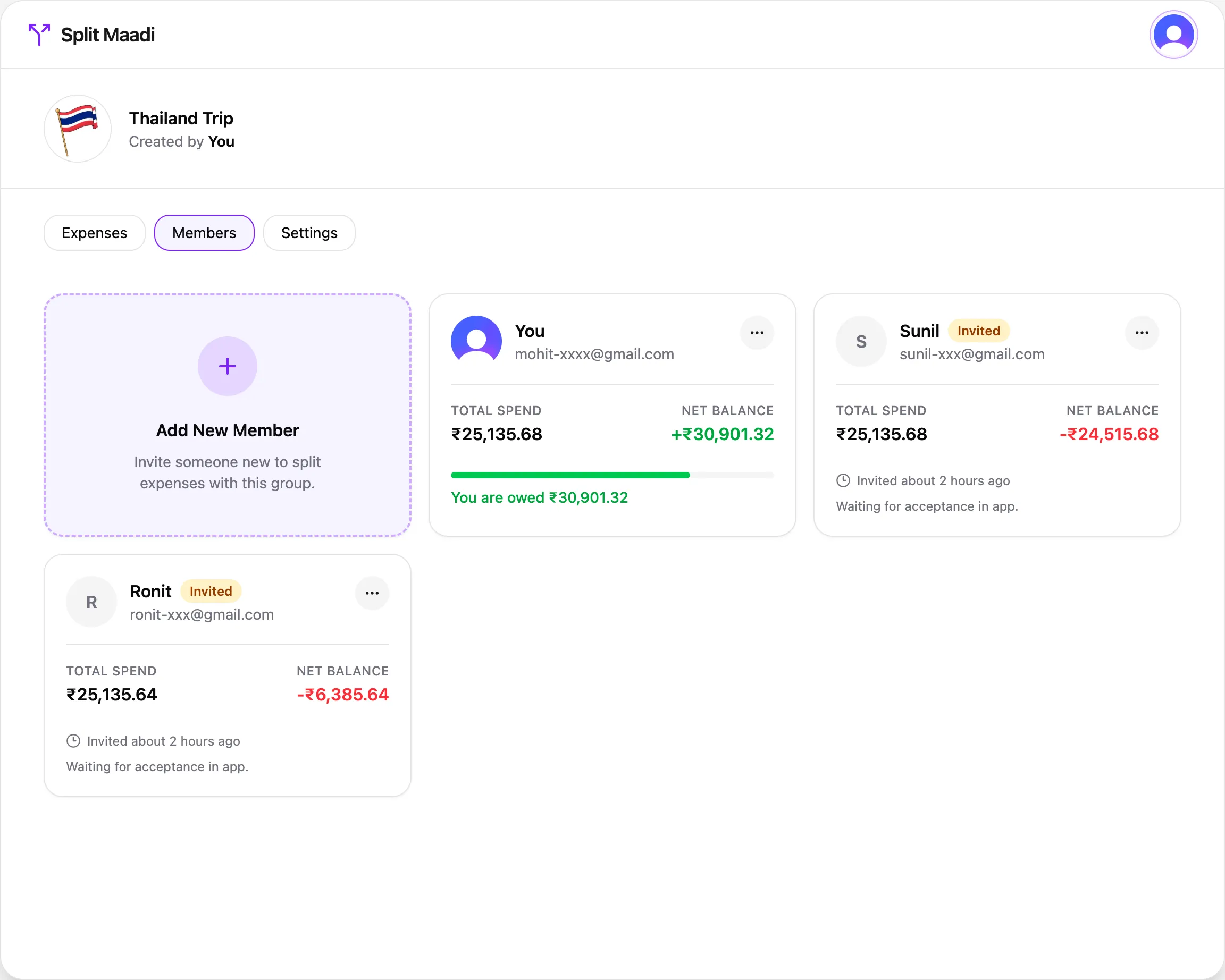
Track all of this somewhere. A group on Split Maadi works well for this — you create a roommate group and just log each bill as it comes. At the end of the month, you can see exactly who owes what, and settle up with one UPI payment instead of keeping a mental ledger that inevitably gets it wrong.
The "I bought toilet paper again" problem
This is the silent roommate killer. It's not about the ₹30. It's about the principle. It's about the fact that you've bought toilet paper, dish soap, and bin bags for the last three months and your roommate hasn't bought a single shared household item.
Two solutions:
Track it. Every time you buy something shared, log it. At the end of the month, the numbers don't lie. If you've spent ₹1,200 on household supplies and your roommate has spent ₹200, there's a clear imbalance to fix.
Create a kitty. Both of you put ₹1,000 into a shared UPI account or wallet at the start of the month. All household purchases come from that. When it runs out, top it up equally. No tracking needed, no resentment building up.
I prefer tracking because it's more flexible — you don't need to move money around upfront. But the kitty works too if you both actually contribute.
Have the money conversation early
The worst time to talk about money is when you're already annoyed. The best time is when you move in.
Sit down for 15 minutes and agree on the basics:
- How are we splitting rent?
- Who's paying which bills?
- How do we handle shared groceries and household stuff?
- How often do we settle up?
Write it down if you want. Or just agree verbally. The point is to have the conversation when everyone's in a good mood and willing to be reasonable.
If you're moving in with someone you found on a flatmate app, this conversation is even more important. You don't have years of friendship to fall back on when things get uncomfortable.
What to do when it goes wrong
Sometimes it does. Your roommate stops paying their share on time. Or they eat your food. Or they invite people over who use your stuff and don't contribute.
Step one: say something. Directly. Not passive-aggressively. Not through a third person. "Hey, I noticed I've been covering the electricity bill for the last two months. Can we sort this out?" is a perfectly fine thing to say.
Step two: if the problem is recurring, put it in writing. Not in a legal way, just "here's what we agreed, here's what's happening, let's fix it." Having tracked expenses in an app makes this conversation so much easier because you're not arguing about vague memories — you have actual numbers.
Step three: if nothing changes, start planning your exit. A roommate who doesn't respect financial agreements probably won't start just because you asked nicely three times. Find a new place or a new roommate. Your sanity is worth more than saving on rent.
Monthly settlement is the move
Don't let expenses pile up for months. Settle up monthly. Pick a date — the 1st, the last day of the month, whatever — and make it routine.
If you're using Split Maadi, this takes about 2 minutes. Open the app, check the balances, send or receive one payment. The app works out who owes whom and by how much, factoring in everything from rent to that pack of sponges someone bought on Tuesday.
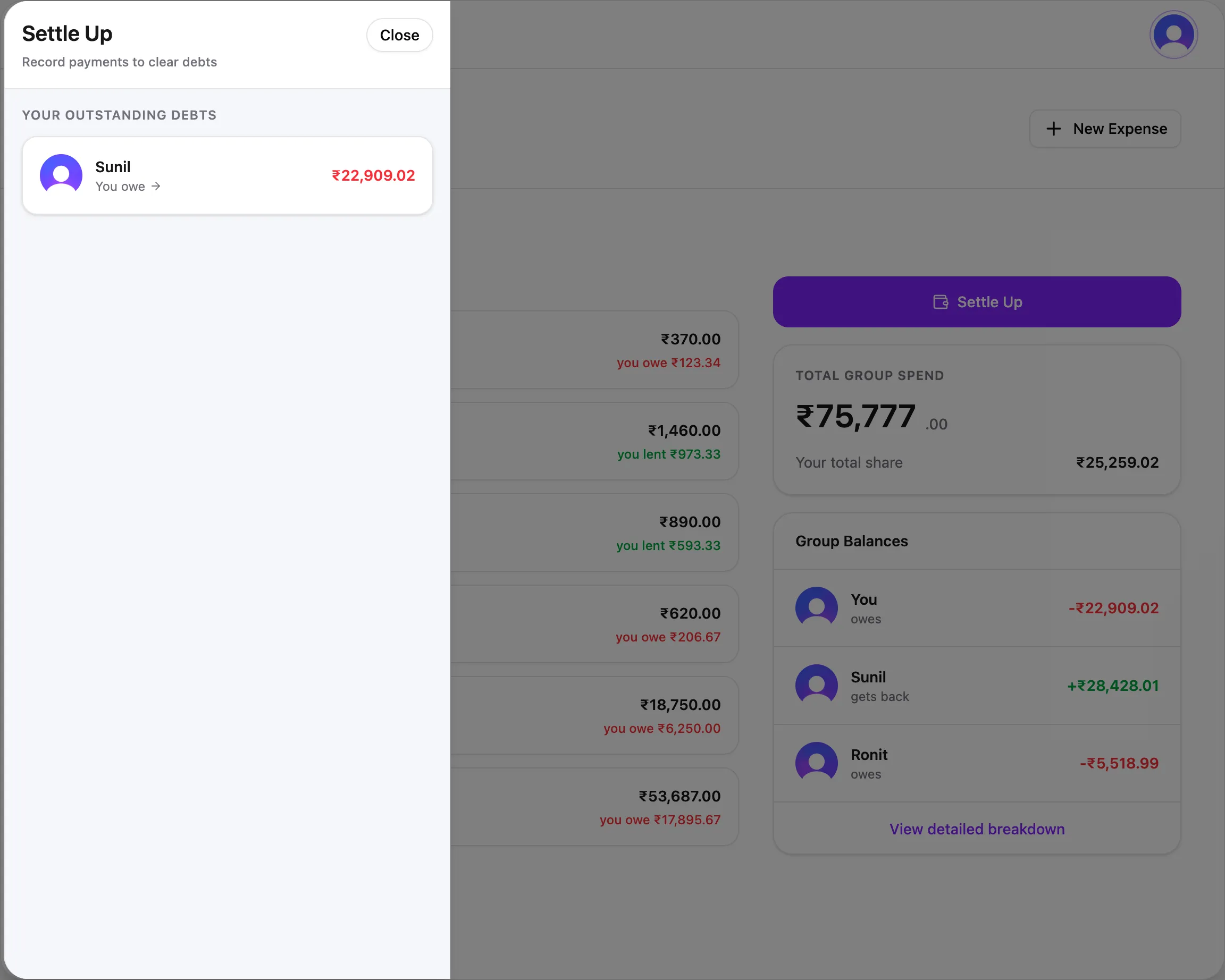
The longer you wait to settle up, the bigger the number gets, and the harder it is to bring up. ₹500 is easy to ask for. ₹5,000 after four months of not settling? That's an uncomfortable WhatsApp message nobody wants to send.
If you want the full walkthrough on how the roommate setup works in practice — percentage splits, receipt attachments, the whole thing — we wrote about that here.
Living with roommates should be fun. The money part should be boring — so boring that you barely think about it. A little structure upfront saves you from a lot of resentment later.