You Know Who You Are
You're the friend who pays for things. Not because you're generous (okay, maybe a little), but because you're the one with the credit card out when the bill arrives. You're the one who booked the tickets because "I'll just get them all and you guys pay me back."
You are currently owed money by at least three people and you're not going to ask for it because that feels weird.
This is a page about fixing that.
The Dinner Bill Situation
Eight of you go to dinner. The bill is ₹6,400. Someone says "let's just split it equally" and everyone nods because the alternative — itemizing who had the paneer tikka and who had the dal — is painful.
But Kavya only had a starter and water. She says nothing because she doesn't want to be "that person." She just pays ₹800 for a meal that cost her ₹350.
Next time, she suggests a cheaper place. Or she skips dinner entirely. The group doesn't realize they've been slowly pricing her out.
With Split Maadi, you can split the bill however it actually makes sense. Equal? Fine. Exact amounts based on what people ordered? Also fine. It takes an extra minute and it means Kavya pays ₹350 instead of ₹800. She comes to the next dinner. Everyone's happy.
Concert Tickets and the Follow-Up Problem
Arjun buys six tickets to a concert. ₹2,500 each, ₹15,000 total. He sends his UPI ID to the group. Three people pay within an hour. The fourth pays the next day. The fifth — let's call him Vikram — says "I'll send it tonight."
It is now three weeks later.
Arjun doesn't want to ask again because he already asked twice. Vikram isn't malicious, he genuinely keeps forgetting. But ₹2,500 is ₹2,500, and Arjun is quietly annoyed every time he sees Vikram post an Instagram story from a restaurant.
In Split Maadi, the expense exists in the group. Vikram can see it. The balance says he owes ₹2,500. No nagging, no awkward DMs, no "hey, remember that concert..." messages. The app is the reminder.
Birthday Gifts and Uneven Contributions
Meera's birthday is coming up. Six friends chip in for a gift. The budget is ₹6,000. Priya buys it because she knows what Meera wants. Now she needs ₹1,000 from five people.
Three people pay immediately. Two don't. Priya screenshots the ₹6,000 payment, sends it to the group, and types "please send your share." One person responds. The other one likes the message.
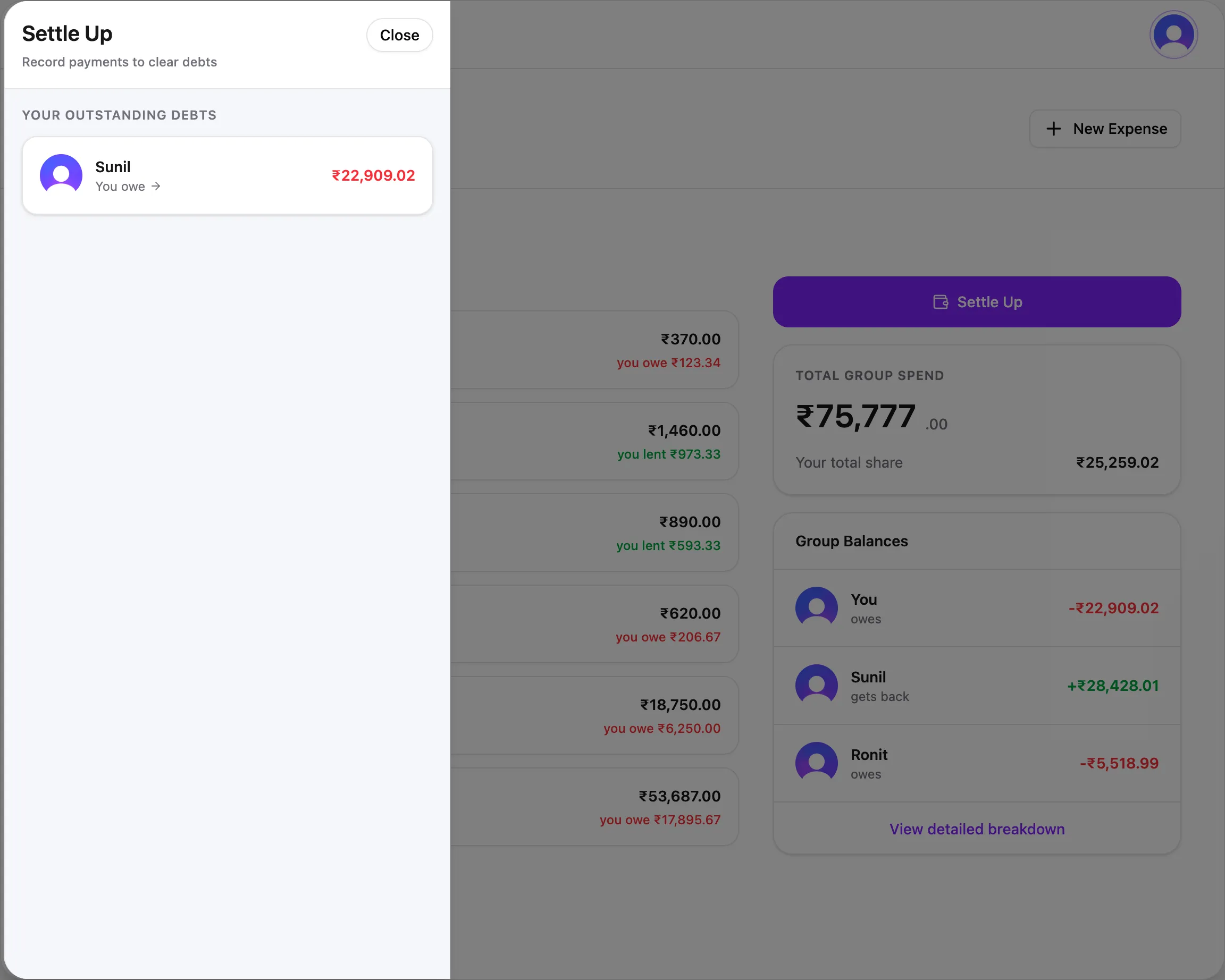
Just add it to Split Maadi. "Meera's birthday gift — ₹6,000" split between six people. Done. Everyone sees it. It's part of the running balance. If someone already owes you for last week's dinner, the gift amount just adds to their total. One settlement covers everything.
The "I'll Pay You Back Later" Friend
Every group has one. They're not dishonest. They're not cheap. They're just disorganized. They genuinely intend to pay back the ₹450 for the Uber and the ₹1,200 for the movie tickets and the ₹800 for their share of the appetizers.
But their mental ledger is a mess. They think they paid you back for the movie because they bought you coffee last Tuesday. They didn't — that was a separate thing, and coffee was ₹350, not ₹1,200.
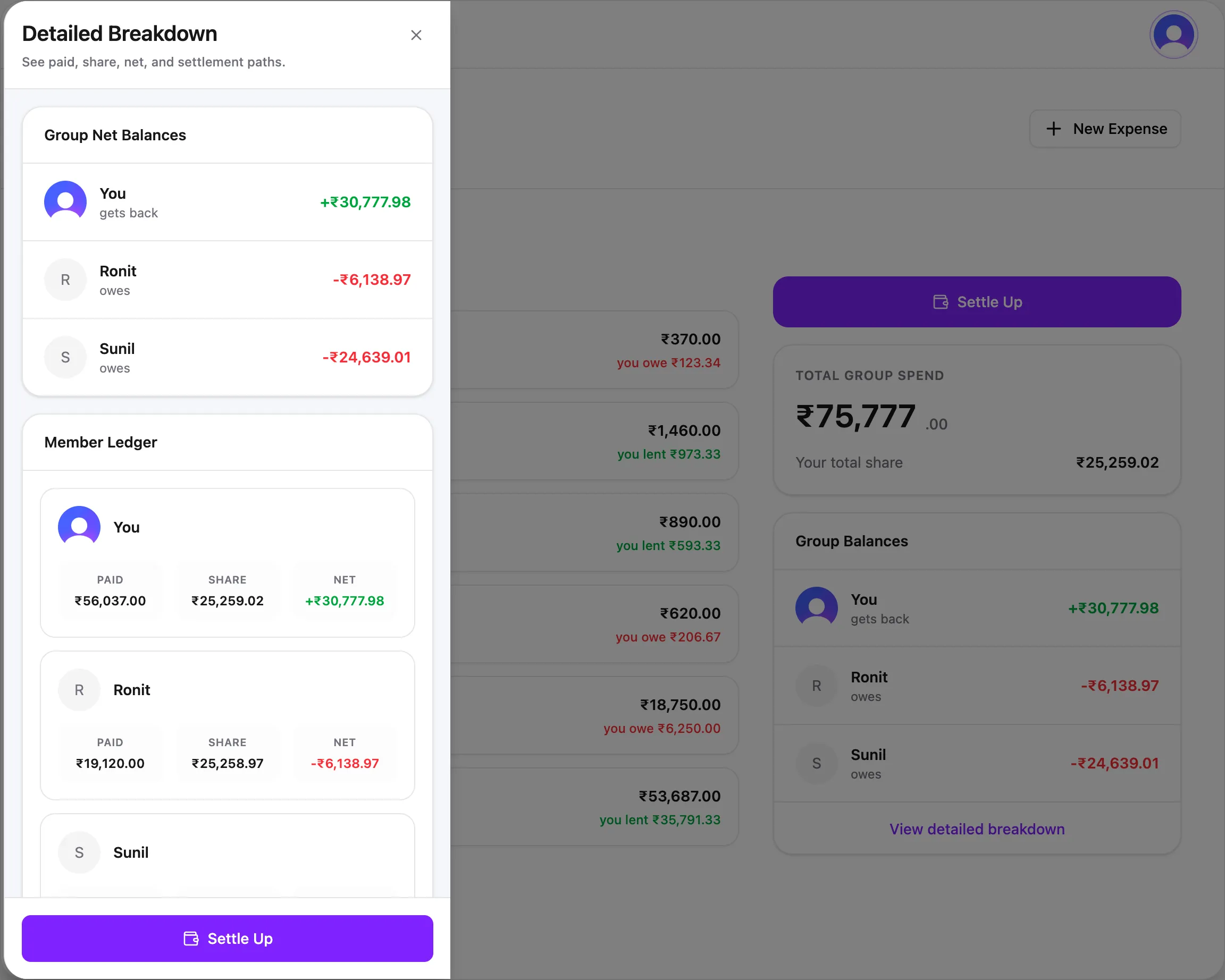
Split Maadi removes the mental ledger entirely. Every expense is logged. The math is done by the app. When your friend looks at the group, they see a single number: "You owe ₹2,450." Not five separate debts they're trying to keep track of. One number. One payment.
No App Download Required
This matters more than you'd think. Ask six friends to download an app and you'll be lucky if four actually do it.
Split Maadi works in the browser. Send an invite link to the group chat. They tap it, sign up in twenty seconds, and they're in. You can also show someone a QR code if they're next to you. No app store, no "I don't have enough storage."
Groups That Come and Go
Not every friend group needs a permanent expense tracker. Sometimes you just need one for a shared gift or a Swiggy group order.
Create a group, add the expenses, settle up, done. It stays in your history if anyone has questions later.
For groups that hang out regularly — your college gang, your Friday dinner crew — keep a running group. Settle up whenever the balances get large enough to bother with.
Simplified Settlements
Five friends, ten expenses over a month. Normally that's a web of "Arjun owes Priya ₹600, Priya owes you ₹400, you owe Kavya ₹300..." — eight separate transactions to sort out.
Split Maadi calculates the minimum number of payments to settle everything. Instead of eight transactions, maybe it's three. Arjun pays Priya ₹1,100, you pay Kavya ₹750, done. Less confusion, fewer UPI transfers, less time spent on a group call saying "wait, did I send it to the right person?"
Stop chasing friends for money
Add an expense, everyone sees it. Free, takes 30 seconds.
Try Split Maadi freeStop Being the Accountant
The friend who tracks expenses shouldn't have to be the one chasing payments too. Split Maadi makes the tracking shared — everyone adds their expenses, everyone sees the balances, everyone settles their own debts.
You can go back to being the friend who has a good time, not the friend with a spreadsheet.
Going on a trip together? That's a different kind of expense tracking — same app, different approach.